
Why Is My Wrinkle Powder Coating Not Forming Texture?
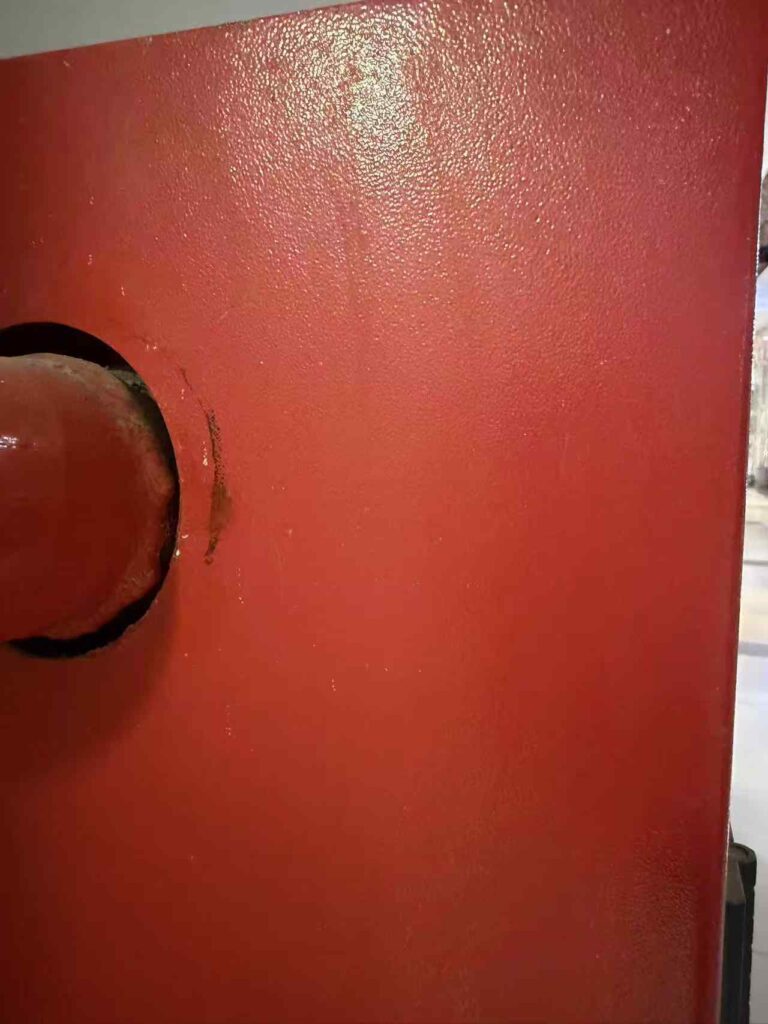
A recent inquiry from a customer in Afghanistan started with a frustrated message and a demand for compensation. The customer claimed the powder was defective. The wrinkle finish they wanted was barely visible, and the part looked unfinished.
The technical team requested photos of the defect. The ones provided were too blurry to diagnose anything. A short video of the application process was then requested. The video revealed the truth: the issue wasn’t the powder. It was the powder coating film thickness.
The customer was applying the wrinkle powder at a thickness of roughly 20 to 30 μm. To get a proper wrinkle texture, that powder requires a film thickness of 80 to 100 μm. The coating was too thin to form the texture, causing it to look uneven and expose the substrate underneath.
Once TianMa provided specific technical guidance on gun settings and film thickness, the customer adjusted their line. The next batch came out perfectly.
This case is a classic example of how powder coating film thickness directly dictates the success or failure of specialty finishes. Here is a breakdown of why this happens and how to control it.
For other common surface defects, see our guide on powder coating pinholes causes.
Why Wrinkle Powder Coating Defects Happen: The Film Thickness Factor
When a textured or wrinkle finish fails to form, the first variable to check is film thickness.
Powder coatings achieve their finish through a process of melting, flowing, and curing. Wrinkle powders are specially formulated with additives that cause the surface to shrink and pull apart at a specific rate during the curing process.
If the powder coating film thickness is too low (like the 20-30 μm in the customer’s case), there isn’t enough material to create the tension required for the texture. Instead of a uniform wrinkle pattern, you get:
- A thin, flat surface with little to no texture
- An uneven finish that highlights the roughness of the substrate
- Substrate show-through (the metal is visible through the coating)
The rule of thumb: Most wrinkle powders require a minimum of 80 μm to achieve a consistent, deep pattern. For high-build or heavy wrinkle effects, 100 to 120 μm may be necessary.
A Practical Powder Coating Film Thickness Guide
Different finishes require different powder coating film thickness. Applying a standard thickness to a specialty powder is a recipe for failure. Use this guide as a baseline:
| Finish Type | Typical Film Thickness (μm) | Notes |
|---|---|---|
| Standard Smooth (Flat) | 60 – 80 | Good coverage and corrosion protection |
| Sand Texture | 70 – 90 | Texture becomes finer as thickness increases |
| Fine Wrinkle | 80 – 100 | Requires strict thickness control |
| Deep Wrinkle | 100 – 120+ | Needs high-build application |
| Metallic / Special Effects | 70 – 90 | Thickness affects metallic orientation and color |
Note: Always consult the powder manufacturer’s Technical Data Sheet (TDS) for exact specifications, as formulas vary.
Troubleshooting: What to Check When You Can’t Build Powder Coating Film Thickness
If you are aiming for 80-100 μm but the powder isn’t building up on the part, it’s usually an application issue, not a powder defect. During the Afghanistan case, TianMa’s engineers provided a checklist of adjustments to help the customer increase their powder coating film thickness. Here are the most critical factors:
1. Check the Voltage and Electrostatic Charge
If the voltage is too low, the powder won’t be attracted to the grounded part. However, if the voltage is too high, it can cause “back-ionization,” where the built-up powder actually repels new powder particles. Ensure the gun voltage is in the optimal range (typically 60-80 kV for corona guns) and check that the workpiece is properly grounded.
2. Aim for a Single, Controlled Pass
For wrinkle powders, aim for the target thickness in a single, controlled pass. If the first pass is too thin, a light second pass may help, but re-coating can disturb the wrinkle pattern. Unlike flat powders, two thinner coats are generally not recommended for texture finishes, as it disrupts the consistent formation of the texture.
3. Adjust Gun-to-Part Distance
If the gun is too far from the part, the electrostatic charge dissipates, and less powder reaches the surface. Maintain a distance of 150–200 mm for optimal transfer efficiency.
4. Increase Powder Output Gradually
If the powder stream is too weak, you won’t build thickness. Increase the powder output (grams per minute) while monitoring the surface to ensure you reach the target thickness evenly.
5. Check the Part Geometry (Faraday Cage Effect)
Deep recesses and internal corners repel charged powder. Adjust the gun angle, reduce the voltage in these areas, or use a tribo-charging gun if necessary.
How TianMa Approaches Powder Coating Defects
Not every coating failure requires a replacement or a refund. Many require a technical conversation.
When a customer reports a defect, TianMa’s technical team starts with a structured diagnostic process:
- Request clear visual evidence (high-resolution photos or a short application video).
- Verify the application parameters (powder coating film thickness, curing temperature, pre-treatment).
- Provide actionable adjustments (gun settings, line speed, thickness checks).
In the Afghanistan case, the goal wasn’t to argue about the claim. It was to help the customer build a proper measuring protocol, adjust their spray parameters (including checking voltage and optimizing the pass strategy), and understand why the material was behaving the way it did. The result was a satisfied customer who now understands the critical importance of film thickness and continues to use TianMa’s powders.
Working with a supplier that understands the application process — not just the chemistry — saves time, money, and frustration.
Frequently Asked Questions
What happens if powder coating film thickness is too thin?
If the film thickness is too low, the coating may fail to form the intended texture (especially for wrinkle or sand finishes), provide insufficient corrosion protection, or show the substrate through the coating (show-through). For wrinkle finishes, a minimum of 80 μm is generally required.
How thick should wrinkle powder coating be?
Most standard wrinkle powders require a powder coating film thickness of 80 to 100 μm. Deep wrinkle effects may require 100 to 120 μm. Always check the Technical Data Sheet (TDS) of your specific powder.
Why does my powder coating look flat instead of textured?
If a textured powder looks flat, it is almost always due to insufficient film thickness. The powder needs enough mass to shrink and form the texture during curing. Other causes include under-curing or incorrect oven temperatures.
Why is my powder not building up on the part?
If the powder isn’t building thickness, check your gun voltage, grounding of the workpiece, and powder output. Ensuring the gun-to-part distance is correct will usually resolve the issue.
Does TianMa provide technical support for application issues?
Yes. TianMa provides troubleshooting support for application defects, including thickness issues, pinholes, and curing problems. Contact the export department for assistance.
About TianMa Powder Coating
TianMa Powder Coating was founded in 1992 and is headquartered in Yueqing, Zhejiang, China. The company specializes in powder coatings for electrical cabinets, switchgear enclosures, industrial equipment, and architectural materials. It operates under an ISO 9001-certified quality system with an in-house testing laboratory. TianMa serves distributors, job shops, and manufacturers across Southeast Asia, the Middle East, Africa, and Central Asia, providing technical troubleshooting support for coating defects. For formulation recommendations or technical consultation, contact the export department.